


Alain Martin and The Forgotten Occupation: Jim Crow Goes to Haiti
-

- February 9, 2026

When filmmaker Alain Martin speaks about Haiti, his words carry both urgency and reverence. Born in Haiti and now based in New York, Martin felt compelled to illuminate a chapter of Haitian history that many have never learned — the U.S. occupation of Haiti from 1915 to 1934. His documentary, The Forgotten Occupation: Jim Crow Goes to Haiti, explores how the arrival of U.S. Marines reshaped the nation’s government, finances, and security forces, setting in motion a decline that still reverberates today.
For Martin, this project is more than a film. It is a corrective lens — a way to restore context to a country too often misunderstood.
“People need to see this film because it’s not just about Haiti — it’s about the history of postcolonialism,” Martin explained. “You can see what happened in Venezuela with Maduro. That same misuse of power was applied in Haiti from 1915 to 1934 in a very neglectful way. It gave us the Haiti we have today.”
Reclaiming a Distorted Image
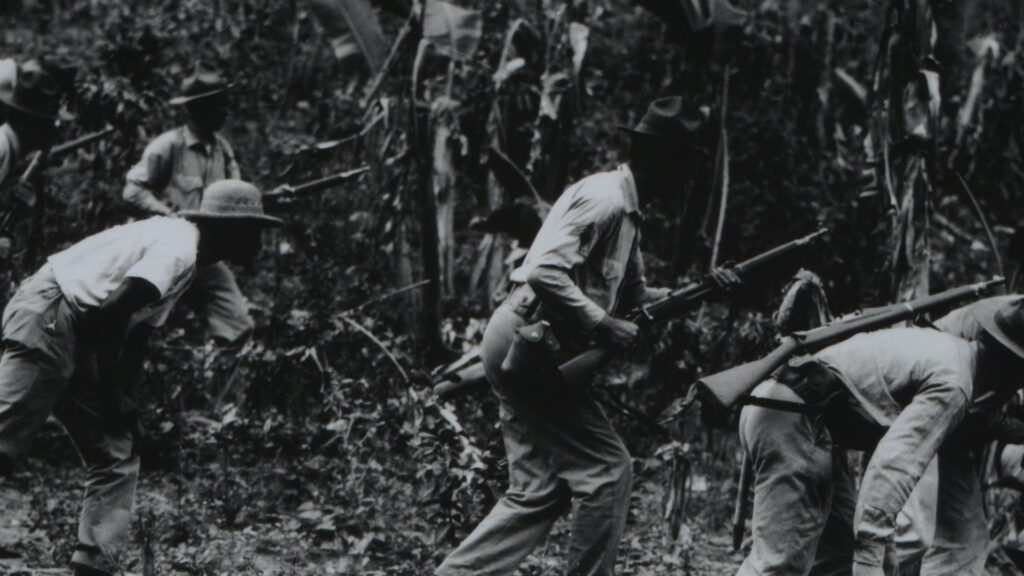
Haiti’s global image has long been clouded by misconceptions — often reduced to stereotypes of mysticism or instability. Martin argues that these narratives obscure the country’s true legacy. Haiti was the first Blackled independent nation in the world and the first republic to abolish slavery, inspiring liberation movements across the globe.
Yet, he notes, the occupation and its consequences are rarely part of conversation.
A Crisis with Historical Roots
Martin connects the past to the present, pointing to the current displacement of Haitian migrants as part of a larger historical pattern.
“Today the Trump Administration is sending back about half a million Haitians to a country that has become unlivable,” he said. “The Forgotten Occupation shows how the misuse of power created a Haiti that’s unlivable. People come to America hoping for something better, only to be told they cannot stay. They’re in no man’s land — not accepted here, and unable to return home.”
For Martin, this makes the documentary not only relevant but necessary.
Unearthing a Hidden History
The title The Forgotten Occupation reflects Martin’s own discovery of this overlooked era. While researching in college, he encountered James Weldon Johnson’s book SelfDetermining Haiti, a work that exposed the realities of the occupation. The revelations were so profound that Martin felt compelled to share them with the world.
Twelve years later, that mission became a film.
“It’s unfair to talk about Haiti as the poorest country in the Western Hemisphere or say its politicians are corrupt without ever bringing the occupation into the discussion,” Martin said. “The occupation is a large part of why Haiti is what it is today. My hope is that this documentary helps contextualize history and the Haitian political situation. We can’t talk about changing Haiti until we change the world’s system.”
A Film as Resistance
Martin sees his documentary as part of the ongoing struggle for Haiti’s future — a contribution to the broader fight for justice, recognition, and historical truth. The film premiered in Los Angeles and is set to debut in Brooklyn, New York, on February 20th at the Brooklyn Children’s Museum.
For those seeking to understand Haiti beyond headlines and misconceptions, The Forgotten Occupation offers a powerful starting point — one that challenges viewers to confront the past in order to understand the present.