


Sonequa Martin-Green Has Nothing Left to Prove
-

- July 9, 2026

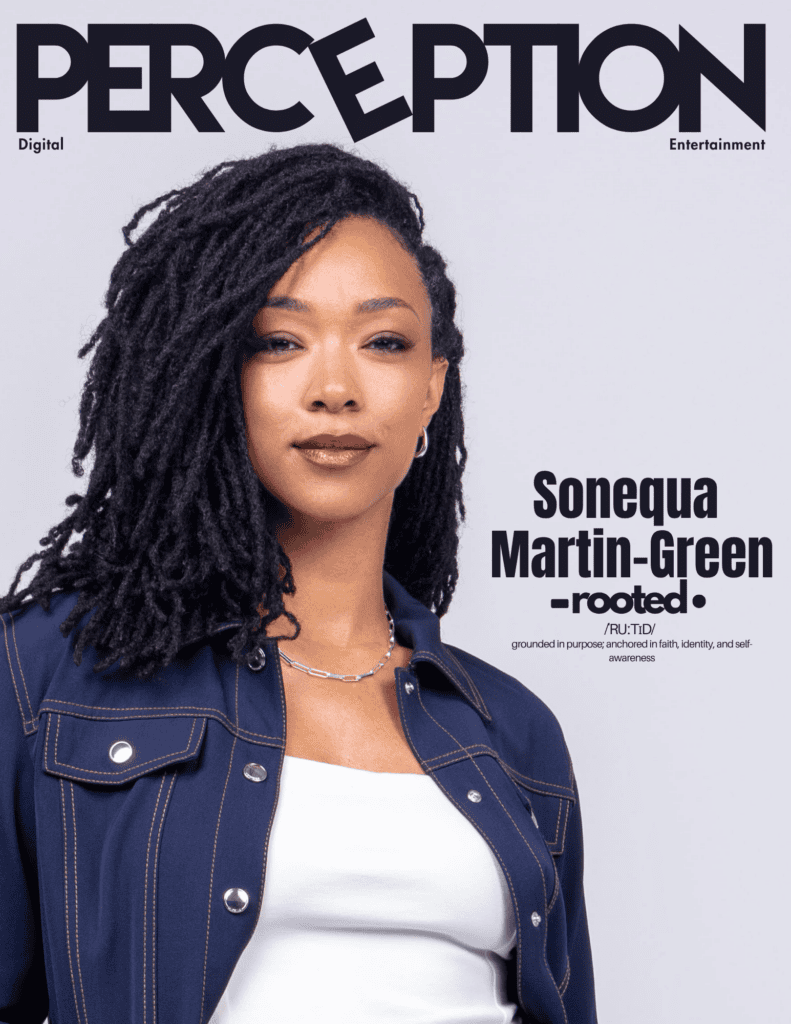
After a milestone year filled with powerful performances, spiritual reflection, and personal transformation, Sonequa Martin-Green is embracing a new era rooted in faith, femininity, service, and stories that matter.
There’s a certain calmness to Sonequa Martin-Green now — the kind that only comes after years of carrying the weight of expectation on your shoulders while still finding a way to push forward.
For more than a decade, audiences have watched her embody women defined by resilience. Whether commanding the screen as Sasha Williams on The Walking Dead or making history as the first Black female captain in the Star Trek franchise through Star Trek: Discovery, Martin-Green built a career on strength, determination, and emotional depth. She became the kind of actress viewers trusted — someone capable of grounding even the most fantastical worlds in humanity.
But in 2025, something changed.
Not in a way that felt manufactured or performative. Not a Hollywood reinvention. If anything, it felt like a woman finally arriving at herself.
“God showed up and showed out in 2025,” Martin-Green says with a laugh full of gratitude. “It was a harvest year.”
And harvest is the perfect word for it.
Within one year came a wave of projects that showcased every layer of her artistry. There was My Dead Friend Zoe, the emotionally resonant film that earned the Audience Award at SXSW. Then came Sarah’s Oil, a story rooted in courage, sacrifice, and faith. Shortly after, she appeared in She Dances, an intimate exploration of grief, redemption, and healing opposite Ethan Hawke. And now comes Boston Blue, a project that may represent one of the most personal chapters of her career yet.
At the same time, Martin-Green celebrated her 15-year wedding anniversary, stepped into a new decade of life, and reflected deeply on the woman she’s become both on and off camera.
“It was like everything was coming to fruition at one time,” she says. “You see the harvest of the seeds that you’ve sown for the last couple of years.”
What makes this chapter feel different, however, isn’t simply the success. It’s the intention behind it.
Earlier in her career, Martin-Green admits she approached the industry from a place many performers know intimately: survival. The pressure to earn respect. The need to prove value. The fear of losing opportunities before fully arriving.
“I had everything to gain, everything to lose, everything to hide, and everything to prove,” she says.
That pressure shaped her in ways she can now recognize with clarity.
“I was trying to gain my worth and my value,” she explains. “I was putting on this masculine shield.”
Now, at 41, Martin-Green speaks with the confidence of someone no longer chasing validation. The ambition is still there, but it’s evolved. Fame alone no longer excites her. Prestige doesn’t either. What matters now are stories with purpose.

“I have to tell stories that matter,” she says passionately. “Stories that serve humanity in some way. I really think this is a service industry. That’s the way I see it. And I want to be a servant.”
That philosophy has become the compass guiding every creative decision she makes.
“I don’t really make my own decisions in that way anymore,” she says. “I always have to check in with God.”
It’s a perspective that became especially important after the conclusion of Star Trek: Discovery. After wrapping the series in 2022 and returning briefly to film the emotional final moments of the series finale, Martin-Green immediately stepped into a demanding stretch of film projects. But beneath the momentum was exhaustion.
“I was exhausted coming off of Discovery and wanted some downtime,” she admits. “I was okay with resting for a second.”
That rest ultimately led to revelation.
In one of the most vulnerable moments of our conversation, Martin-Green reveals there was a period when she genuinely questioned whether there was still room for her in Hollywood as her relationship with faith deepened.
“I had decided to leave,” she says candidly. “As I was growing closer and closer to the Lord, I thought there was not going to be a place for me in this industry anymore.”
Instead, she says she was guided back toward clarity and purpose.
“What I learned is that I needed to decrease so that He could increase,” she says.
That shift transformed not only how she views her work, but how she views herself.
Nowhere is that evolution more visible than in Boston Blue, where Martin-Green plays Detective Lena Silver — a woman whose faith is not hidden behind subtext, but openly woven into her identity.
For the actress, the role represented something groundbreaking on a personal level.
“This is the first time I have played someone who has outspoken faith,” she says. “I pray in a scene later in the season, and I had to take a moment like, ‘Whoa. Here I am saying a prayer on national television.’”
What resonated most deeply with her was seeing a successful Black and multiracial family portrayed through a lens of faith, service, sacrifice, and community leadership.
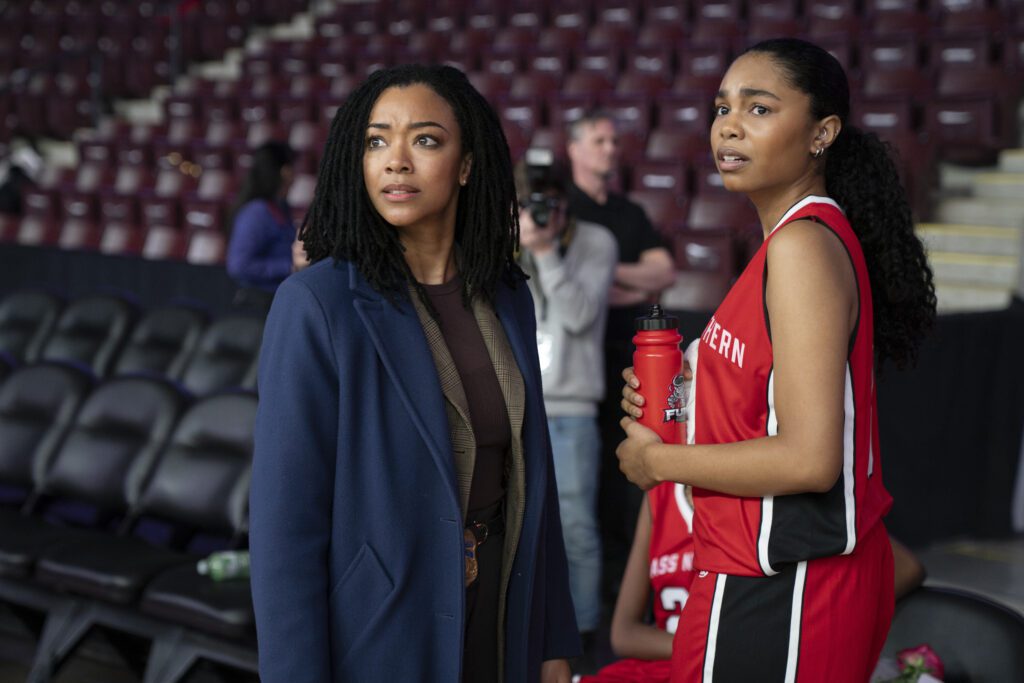
“One of the things that was really important was showcasing a Black and multiracial family being faith-forward,” she explains. “They’ve become pillars in the community through blood, sweat, tears, service, and sacrifice — but also through their relationship with God.”
Martin-Green lights up when discussing stories centered around service — people who dedicate themselves to protecting and helping others, often at great personal cost. It’s something she admits she’s endlessly fascinated by.
“People who put their lives on the line for strangers, for the greater good… I’m so fascinated by that,” she says. “I want that. It’s a dream to be like that.”
Boston Blue returns for a second season this Fall 2026.

Yet despite a career built on portraying strong women, Martin-Green says the kind of strength she’s interested in now looks very different than it once did.
These days, she’s drawn toward softness.
Not weakness. Not fragility. But softness rooted in confidence, empathy, femininity, and trust.
“I want to showcase the strength in softness,” she says. “The strength in divine femininity.”
It’s an idea she returns to repeatedly throughout our conversation — this belief that nurturing, empathy, vulnerability, and love require their own kind of ferocity.
“There’s a ferocity to nurture,” she says. “There’s a ferocity to empathy. There’s a ferocity to living heart-forward.”
For years, she says, softness felt impossible because survival mode demanded armor. But motherhood, marriage, faith, and experience have reshaped her understanding of womanhood entirely.
Now, instead of striving to control everything around her, Martin-Green says she’s finally learned how to trust.

“For me, softness is a symptom of trust,” she explains. “I felt like I had to earn safety, earn support, earn provision. But now? I can relax my shoulders because I know it’s taken care of.”
That peace radiates through her now.
Not because life has suddenly become easier.
Not because the industry has become less demanding.
But because the woman navigating it no longer feels the need to prove she belongs there.
And perhaps that’s what makes this era of Sonequa Martin-Green so compelling.
After years of playing heroes, survivors, leaders, and warriors, she’s finally embracing the power of simply being herself.
Soft. Grounded. Faith-filled. Purpose-driven.
And stronger than ever because of it.