

Jessica Frances Dukes on faith, complete audacity and what happens when the cocoon finally breaks
-

- September 22, 2026

The last time Jessica Frances Dukes and I spoke, we were talking about the end of the world.
Well, the televised version of it.
She was preparing audiences to meet Emma, the woman at the emotional center of MGM+’s post-apocalyptic drama Earth Abides. A year later, Jessica and I are catching up again, but this time the conversation feels less like survival and more like arrival. In the span between our talks, she has moved through four vastly different television worlds: rebuilding humanity in Earth Abides, entering the rarefied Black society of HBO’s The Gilded Age as Athena Trumbo, taking command as FBI agent Birdie Polk in MGM+’s gritty 1980s crime drama The Westies, and an upcoming guest starring role on AppleTV+’s forthcoming second season of Presumed Innocent.
Four shows. Four women. Four completely different lives.
Yet when I ask Jessica where she believes she is in her own life and career, she does not reach for the language of celebrity or even success. She reaches for transformation.
“I was literally just doing this today because it’s the eclipse day,” she tells me. She had been sitting on her balcony, journaling and processing everything that had happened. “It’s almost like I’ve been training. I’ve had the opportunities. I’ve done some wonderful work with some wonderful people, and now it feels like this sort of butterfly era.”
There is a clarity in her voice—not the kind that comes from believing there is nothing left to prove, but the kind that comes from having proof already.
If you have followed Jessica’s career, the moment feels earned. Long before television audiences knew her as the formidable Special Agent Maya Miller on Netflix’s Ozark, she had built a rich life in the theater. The discipline of that world still follows her onto television sets. She does not simply arrive, perform and leave. She watches directors work—even on days she is not called. She studies how everyone around her creates. Moving from role to role reminds her of the rhythm of theater: one show closes and the next begins.
She calls her present life a “blessed normality.” I call it momentum.
Still, success creates its own strange tension. You can be grateful for what is happening while already imagining what comes next. Jessica understands that balance intimately.
“It’s half faith and half complete audacity,” she says, laughing just enough to let you know she understands exactly how bold the statement is. But she also means every word. “Knowing that if I put in the amount of work I’ve put in, and I’ve already been shown the fruits of that labor at every stage, there’s no way that what I’m working toward is not coming—because I already have the proof.”
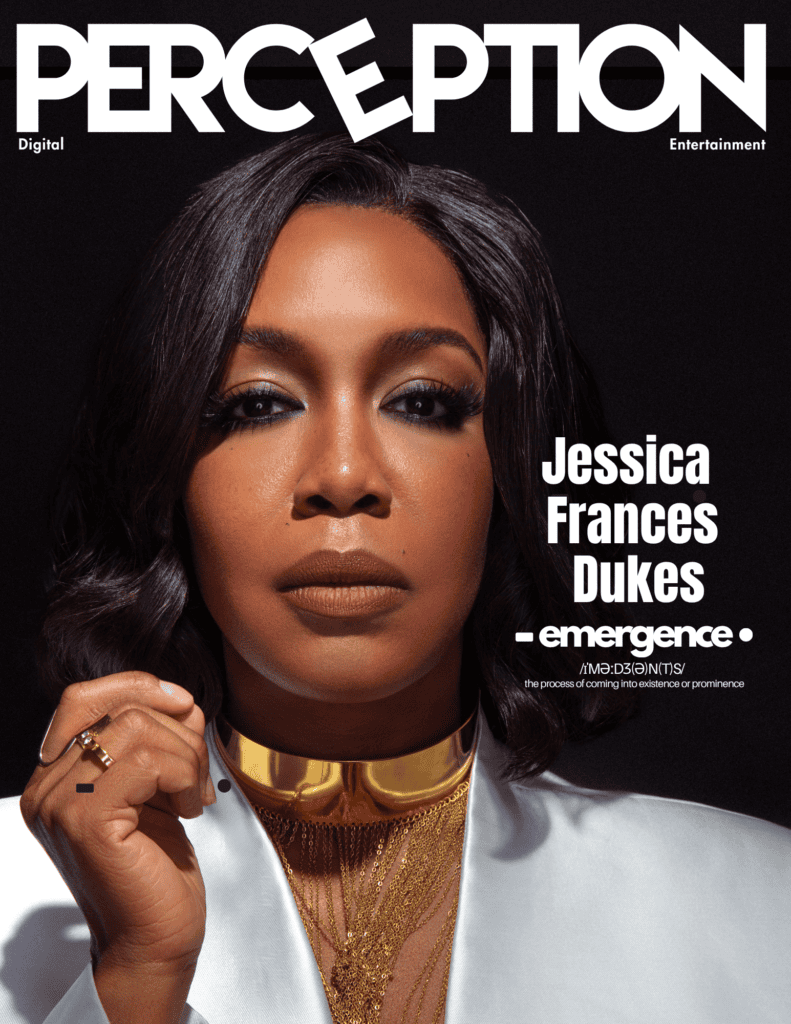
Then she says something simple enough to pass by if you are not paying attention: “You forget that right where you are was a goal.”
Right where you are was a dream.
For an industry so consumed with what is next, Jessica’s ability to honor what is now might be one of her greatest forms of resistance. She is still dreaming. She is still building. But she refuses to erase the answered prayers standing around her while she processes the next one.
Women With Legs
Jessica’s ambition is not disconnected from her artistry. When scripts arrive, she is not looking merely for screen time. She is looking for a woman with a life.
“For me, the non-negotiables are it has to be a fully realized person,” she says. “She can’t be a prop.”
Jessica considers every opportunity from multiple angles: Is there longevity? Is there a chance to work with artists who will stretch her? Can the character inspire people who look like her? Does this woman possess a mind, a point of view and enough interior life to exist beyond the function she serves in someone else’s story?
That discernment matters because, as Jessica puts it, “I’m not just an artist. I’m also a business.”
Birdie Polk checked both boxes.
Set against the violent world of organized crime in 1980s Hell’s Kitchen, The Westies gave Jessica a character whose possibilities made her curious. Birdie was written as powerful, but power alone does not make a person complete. Jessica wanted to know who she was.
“In the first script, I was like, ‘Oh, she is a badass—excuse my language,’” she recalls. “I had to learn New York in the 1980s. I had to learn that accent. I had to build this battle-ax of a woman. And that is so much fun. When you get a chance to do the art, that’s when it’s really exciting.”
Birdie also presented a historical challenge. A Black woman occupying that level of FBI leadership in the 1980s was not the norm. Jessica could not ignore the tension, flatten it or simply pretend the obstacles did not exist.
“I had to make that make sense for me because, at the end of the day, I have to play the truth.”
So she went looking for Birdie. She researched Black women in the FBI during the 1970s and found pieces of her in women whose ability exceeded the opportunities available to them. Birdie became an amalgamation—part invention, part reclamation and part tribute to the women who should have been allowed to lead.
Jessica points to Sylvia Mathis, a brilliant Black woman with a law degree who entered the Bureau after a judge recognized what she could contribute. That history allowed Jessica to imagine not an impossible woman, but a possible woman denied the same road afforded to others.
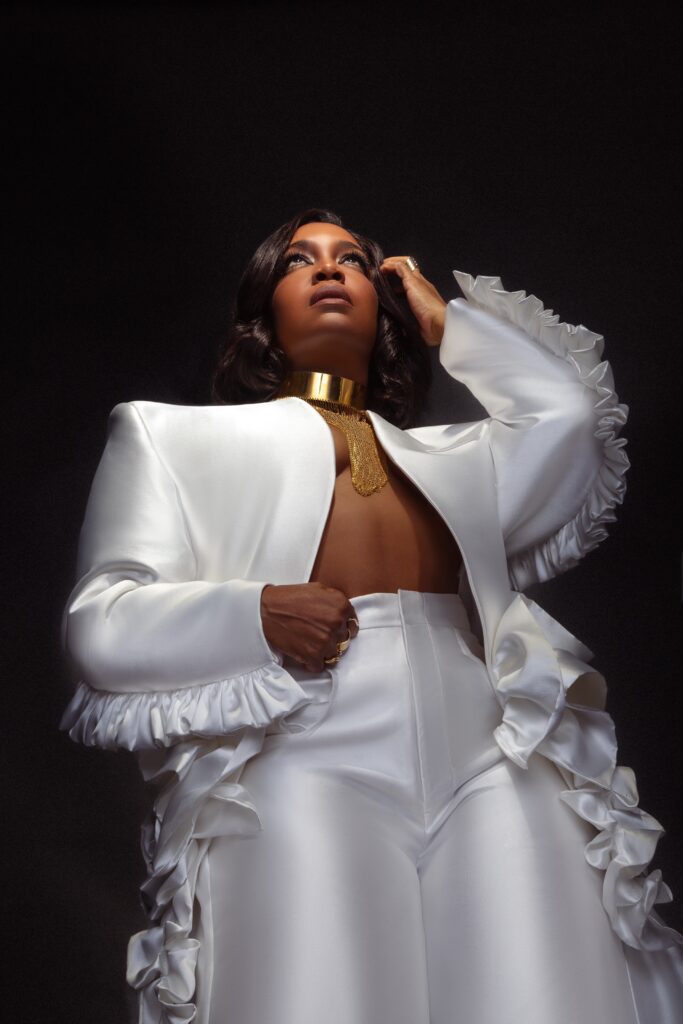
“What would have happened if she was allowed the same opportunities?” Jessica asks.
It is a question larger than Birdie. In Jessica’s hands, the character carries the authority of women history overlooked alongside the grit of New York in the 1980s. She is neither Maya Miller in vintage clothing nor a generic “strong Black woman” inserted into a crime story. Jessica built a massive backstory to ensure Birdie and Maya were fundamentally different—even if both happen to carry an FBI badge.
“Chris and Michael were very specific on the type of woman that Birdie was, but they gave me creative freedom with who she was specifically,” she explains. That space between type and person is where Jessica does some of her most interesting work. “I can take the seeds of what the writers, producers, and directors have given me and combine it with my own thoughts to make it into a unique artistic being.”
That is the quiet power running through her performances. Jessica does not simply play authority; she investigates what it cost a woman to possess it.
The Artist and the Company
Because we have known one another long enough to move beyond polished answers, I ask Jessica about something that rarely gets discussed honestly: the business of surviving between the moments when audiences see you. By the time a project premieres, the check may already be long gone. How does an actor remain financially and creatively secure enough not to accept everything out of fear?
For Jessica, it begins with the people at the table.
“Who you surround yourself with is everything,” she says. Her professional team is what she calls an “entourage of knowledge”—people she trusts enough to debate whether each opportunity serves the long-term direction of her as an artist and her company. And in this conversation, the company is Jessica Frances Dukes.
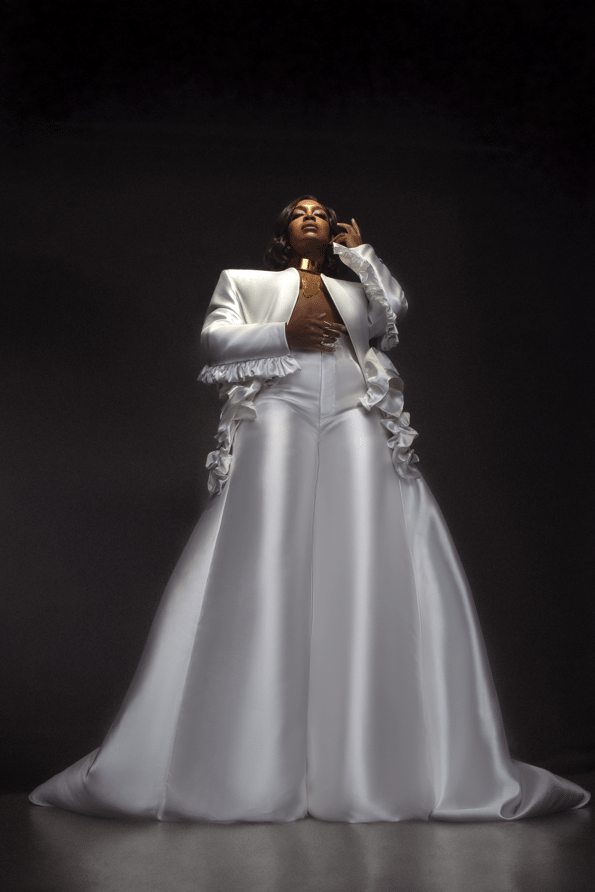
She thinks like a CEO because she is one. Every role must answer to several departments within her: creative, financial, marketing and the part responsible for where this career is ultimately going.
“I think acting is a balance of giving everybody what they want and still achieving what you want creatively for the role,” she says.
That balance requires the ability to say yes, and it also requires knowing when to creatively push.
“Honey, faith without work is dead,” she answers immediately. “He will let you know if it’s not the room, but you will never know if you don’t try to bang down the door.”
And if your knuckles start bleeding?
“Then you go, ‘Okay, you know what, God? I got you.’”
There it is again: faith and complete audacity. Pray, listen to your instincts, build the strongest team—and still walk toward the door. Jessica is not waiting passively for destiny to locate her. She intends to meet it halfway.
Along the way, Jessica expressed her gratitude for creating “wonderful work with wonderful people, existing in multiple worlds, time periods, professions, passions, and working with the best of the best of crews and creatives. I am artistically full every day. I look forward to celebrating everything that is coming. This journey has been and continues to be so rewarding, so soul filling, and such an honor.”
Before we end, I ask her to name the era she is entering. People have their soft eras, their healing eras and, occasionally, their villain eras. Jessica laughs at the last suggestion. Hers will never be a villain era.
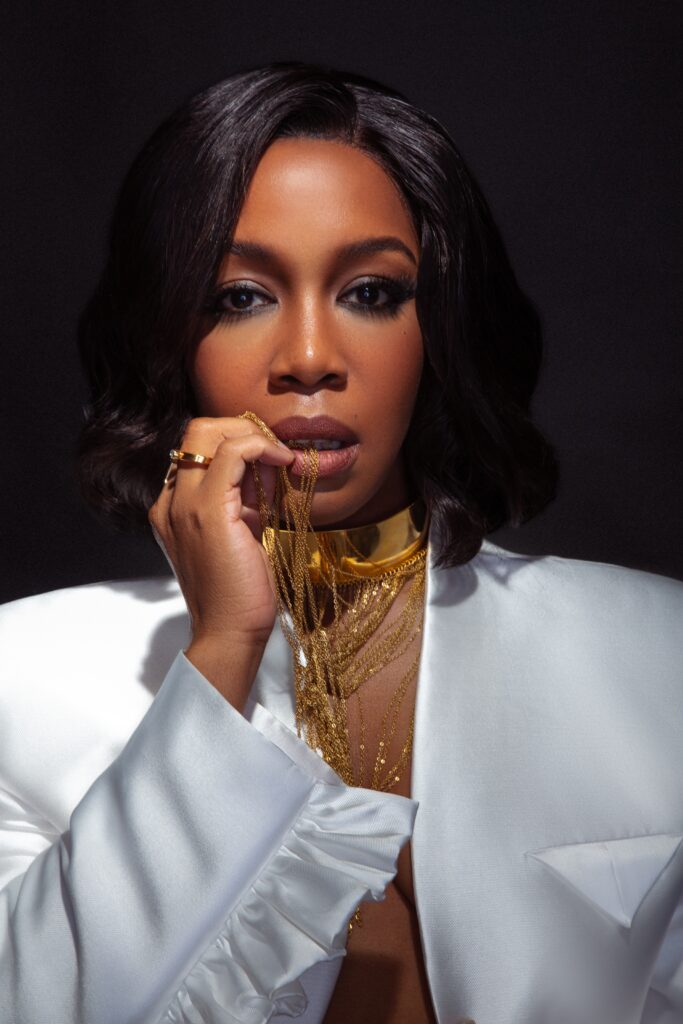
She pauses and thinks aloud. She is the boss of her company. The company is successful. She is thriving, and she wants to keep going. “I am a CEO. I’m the president of my company, and I’m going to do everything I can to make sure it’s successful, I’m successful, and we inspire the whole world along the way.”
The answer finally finds us together.
“Boss Lady Era,” I tell her.
“That’s exactly what it is,” she says. “Boss Lady Era.”
Near the end of our call, Jessica turns the interview around on me. She tells me that my own fitness journey helped inspire her to turn up the volume on her weights, her gym, her meal plan and get back to the strict life. It is a tender reminder of what longtime friendship looks like: while you are watching someone else rise, you may not realize they have been watching you rise too.
The last time Jessica and I spoke, the subject was surviving the end of one world. This time, it is about the courage to claim the next one as her own boss in charge of her own destiny.
Photograhy Credit
Photographer: Fidel Gonzalez
Stylist: Tyler McDaniel
Hair: Arend Jackson